Blog
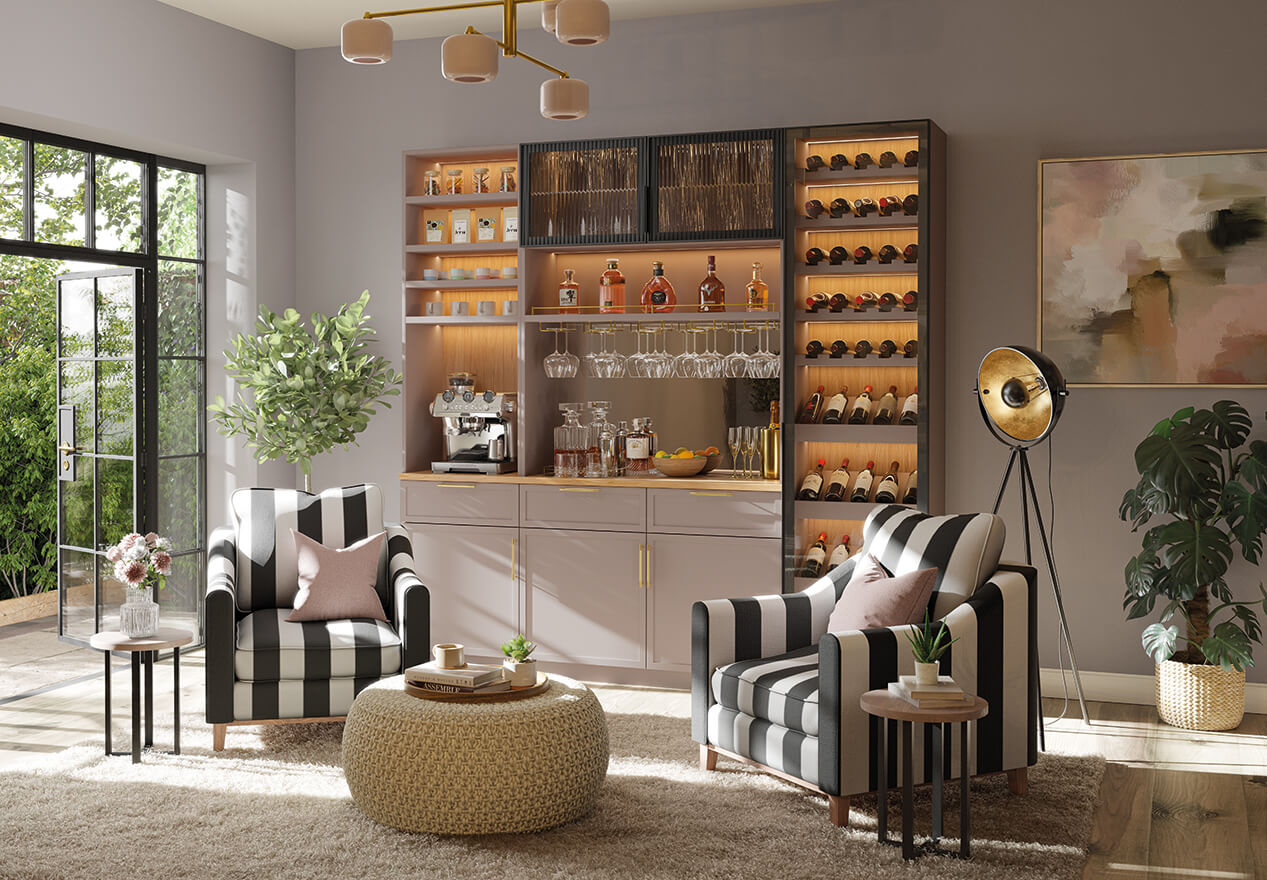
The entertainer’s corner: sparkling evenings at the home bar
Through the window, a golden summer sunset shimmers. Behind you, a pop and a clink. From the hallway, the sound of warm welcomes floats to your ears as you turn to greet your guests.
There’s no rushing, no last minute scramble. You take one final look over the room, set as it should be and ready for the hours ahead, before you head to the door and the party begins in earnest.
Previously we’ve looked at how spaces in your home solely for stillness and relaxation can transform everyday living.
Now, we’ll examine what happens when the little room of your own opens up for family, friends, and loved ones, and how those little spaces of stillness can change how you host in more ways than you might think.
The benefits of zoning at home – the emotional impact of the micro-zone
The old adage “a place for everything, and everything in its place” doesn’t just apply to storage.
Zoning is what transforms an open plan room from simply “big” into somewhere that feels good to live in. It creates intentional space, rather than assuming a large, open plan room can do it all by virtue of its size.
By creating defined spaces for every part of life, be that cooking, watching TV, homework, home working, hobbies, entertaining, or just taking a moment in the day for yourself, you can make life flow more easily. When every activity has a place, every moment has a home.
Zoning is a practical consideration in open plan homes, but even in properties with all their walls still intact, the scaled down version – micro-zones – can still change the way you live for the better. A reading nook in a living room, serving space in a dining room, or a “getting ready” spot in the bedroom doesn’t just give your belongings a logical home, it lets you compartmentalise your time and energy into physical space too.
The importance of zoning for entertainers
Zoning doesn’t just maximise the space that you have, it makes sure no corner of your home is left unloved.
When entertaining, zoning makes a big space feel more comfortable and more intimate. Big empty spaces make humans feel unsafe on an instinctive level, and we tend to cling to the edges of a large room. It’s why the best conversations happen in the kitchen at parties – it’s usually a smaller space, with more in the room to make us feel less exposed. By adding zones to your space, you’re not just maximising useful space, you’re maximising the number of spaces your guests want to be.
Creating the entertainer’s corner
There are lots of ways in which designers can help create micro zones and encourage your guests into a warm, comfortable, connected environment.
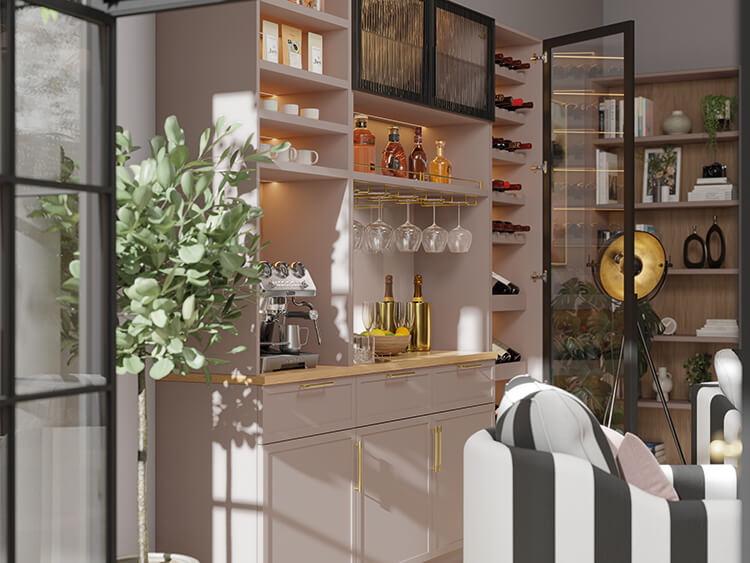
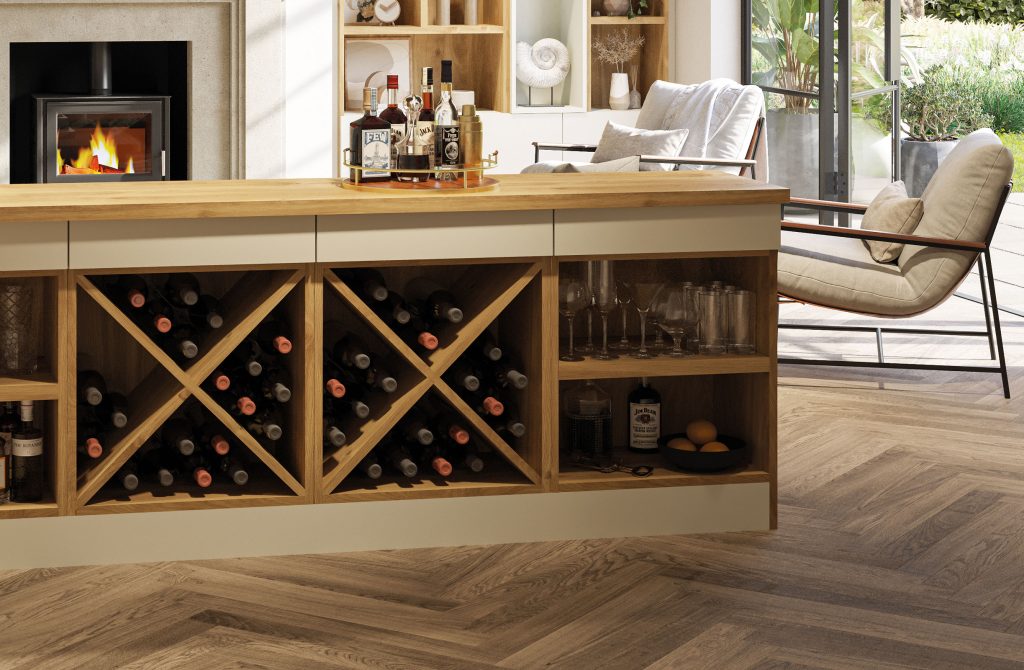
A home bar space like this one has the added benefit of being your right hand host – a space designed specifically for drinks and conversations, so you don’t need to be running to the kitchen or the cellar throughout the evening.
But how do you take what can feel like an area designed only for function – the home bar – and create a space that feels good, both for you and for your guests?
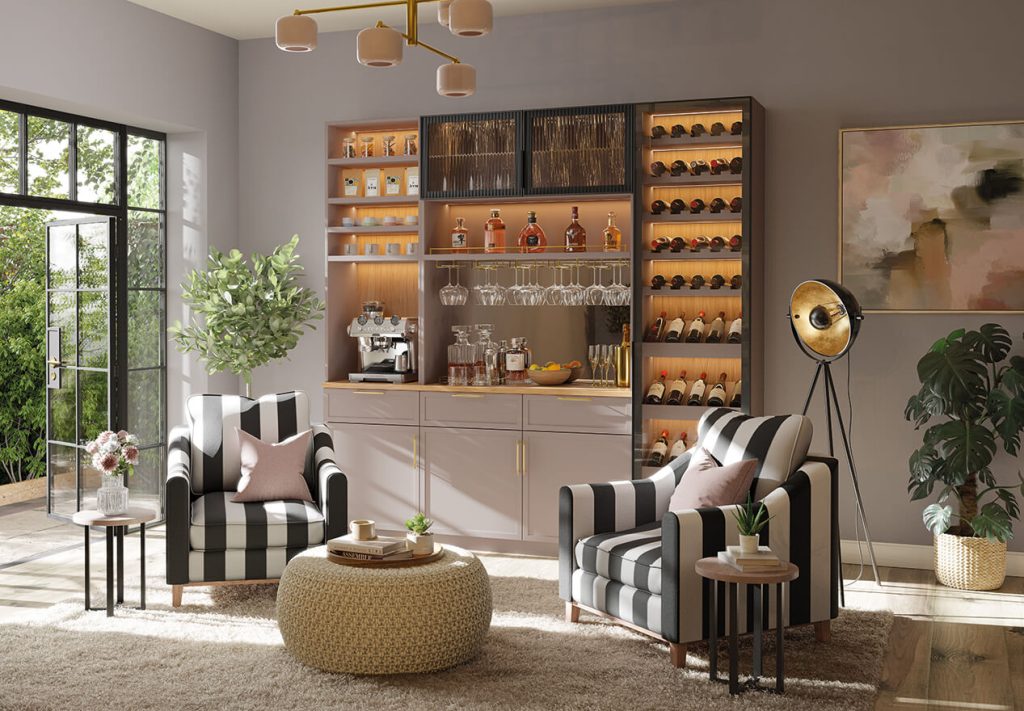
There are a few different ways to make a micro zone feel like its own unique space, with no construction work needed.
Colour
A coat of paint can be one of the most effective delineators in a home.
Stepping into a space where the dominant colour changes immediately tells our brain “You are somewhere different now”.
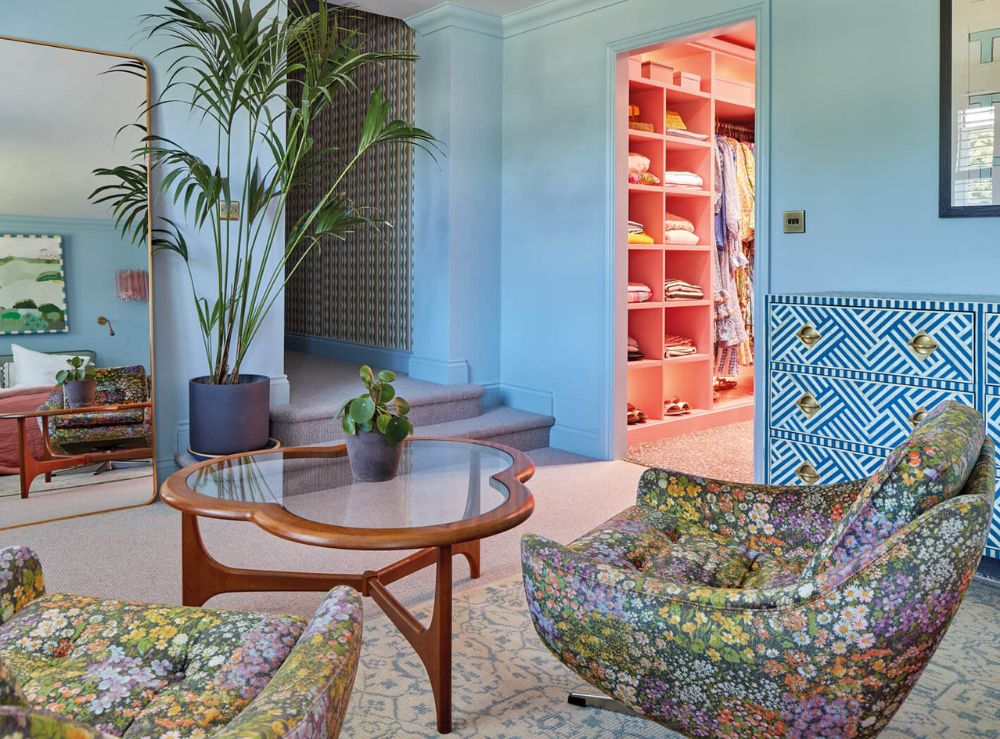
Analogous colours look seamless in a particularly open plan space and define an area through subtle colour contrast when you look over from elsewhere in the room. For a bolder transition, moving from a large, light space, to a smaller one contrasted with a darker colour creates a warm, intimate, cosy feeling. Or use two bold, contrasting colours for a playful colour-blocked room that will always feel exciting, both for you and your guests.
Rugs
Using the same visual principles, adding a large contrasting rug immediately creates a square of space that is “different” to the space around it, and create the sense of a new room in doing so.
On dark floors, light shades offer the biggest contrast, while bolder prints can look incredible over light wood. On tiled floors, intentional print mixing or a single bright colour can make the space feel defined without getting lost in the existing pattern.
Furniture
Furniture can also be used to form physical boundaries between spaces. Sofas and chairs facing into a zone, with backs to the rest of the room, help make an area feel more insular, while shelving and islands can be used as intelligent dividers, letting light through while still feeling like guests are stepping over some kind of threshold as they move between areas of the home.
Lighting
Not only can lighting spotlight different areas of a room, but the different types of lighting can also tell us more about what a space is used for too. Pendant lighting over a dining space illuminates the table, while an Anglepoise next to the reading chair makes a library nook feel extra cosy. In a home bar space, in-built lighting casts an ambient glow over the surrounding area, while making pouring and serving easy in the low lights of the party.
A space of your own, shared with those you love
For so many people, one of the great joys of entertaining is to share your spaces with the ones you love. Fitted furniture, along with some clever interiors tricks, can help to create spaces that are completely yours, and yours to share.
Download our brochure for more ideas on zoning, styling, and micro-zone design, or book a design visit and start planning a space made for the moments you love.