Design
Timeless versus tired: the role of nostalgia in interior design
The past always seems to have a way of finding its place in the present.
The rooms we remember from our childhood homes are often defined by the trends of the time. What we often remember even more clearly is how those rooms made us feel: safe, excited, grown‑up, or at ease in our own space.
There is, however, a fine line between a room that is bold, nostalgic, and inspired by much-loved trends that came before, and a room that is dated. We’ve all seen stunning mid-century homes that age softly into a warm, evocative tribute, and garish, cloying spaces that are stuck in a time capsule in similar abundance.
So where is the line, and what is it that pushes a space to one side or the other?
What makes a space enduring or outdated?
What separates a space that endures from one that quickly feels outdated is rarely the reference itself, but how it is integrated with other design notes.
Often, it’s also the details you don’t immediately notice that make the greatest difference. When we design bedroom and dressing spaces, in particular, we begin with how you want the room to feel and function every day. From there, we look at the balance of light, personalised colour palettes, and precise joinery in quality materials. These elements ensure your space not only looks refined today but continues to feel relevant for years to come.
Nostalgic details and markers of previous design eras can feel timeless when its proportions are balanced, its materials are authentic, and its tones are carefully calibrated. The same idea pushed too far or executed without restraint, risks feeling stuck in a moment, rather than transcending it.
The homes we grew up in were defined by trends. The homes we aspire to now are defined by restraint, materiality, and form.
At Neville Johnson, when we look at nostalgia, we design through the lens of how you live now, creating spaces that feel emotionally familiar without being held back by the past
Past meets present: interior cues reimagined
Our designers love taking cues from the styles that feel special to you, with the experience and eye to know how to integrate nostalgic features in a way that contemporary and personal, without feeling dated or gimmicky. Some of our favourite trends to re-style in luxury bedroom furniture include:
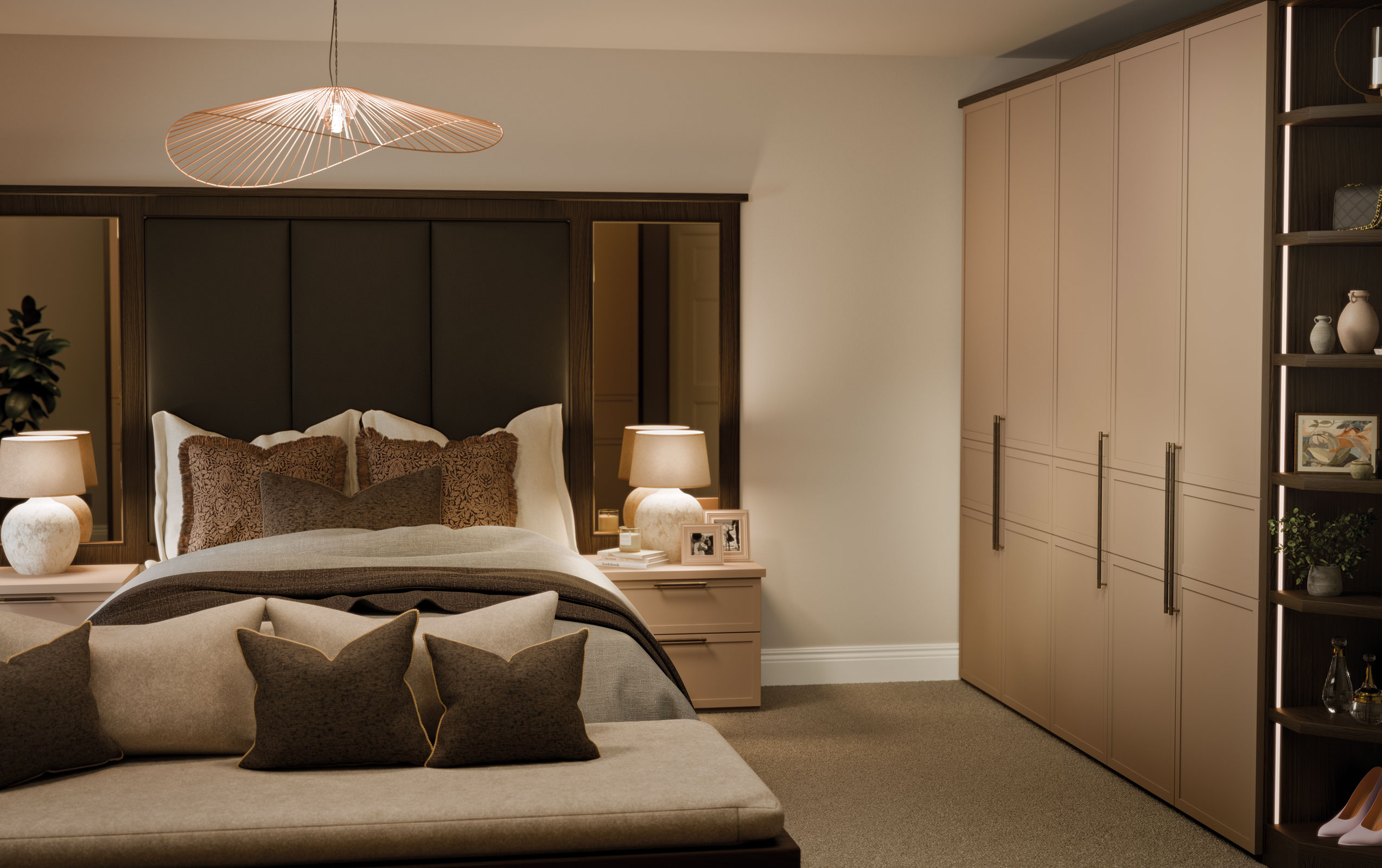
Statement headboards
Headboards have always been a key design choice in the bedroom, either as a statement or a quieter, less obtrusive piece.
Then: The 1970s were huge for statement headboards. Solid wood, padded headboards, and rattan drew the eye, but in conjunction with other styles of the era, like deep wood tones, these features can make rooms feel heavy and dated.
Now: Sculptural headboards in tactile fabrics anchor the bedroom with softness and sophistication, turning a nostalgic element into a timeless statement.
Bold pattered walls
Walls were once loud declarations of style; now they’re subtle statements of personality.
Then: 1980s bedrooms often layered bold, busy wallpapers wall-to-wall, overwhelming spaces with small ditzy florals or larger geometric prints in soft pastel tones.
Now: A single feature wall or an oversized, tonal print adds personality without overwhelming the senses, so your bedroom remains a place to decompress at the end of the day.
Pine and light wood furniture
The right timber can transform a bedroom, turning nostalgia into enduring style.
Then: The 1990s embraced knotty pine and orange-toned mass-market pieces, creating bedrooms that felt practical but quickly dated.
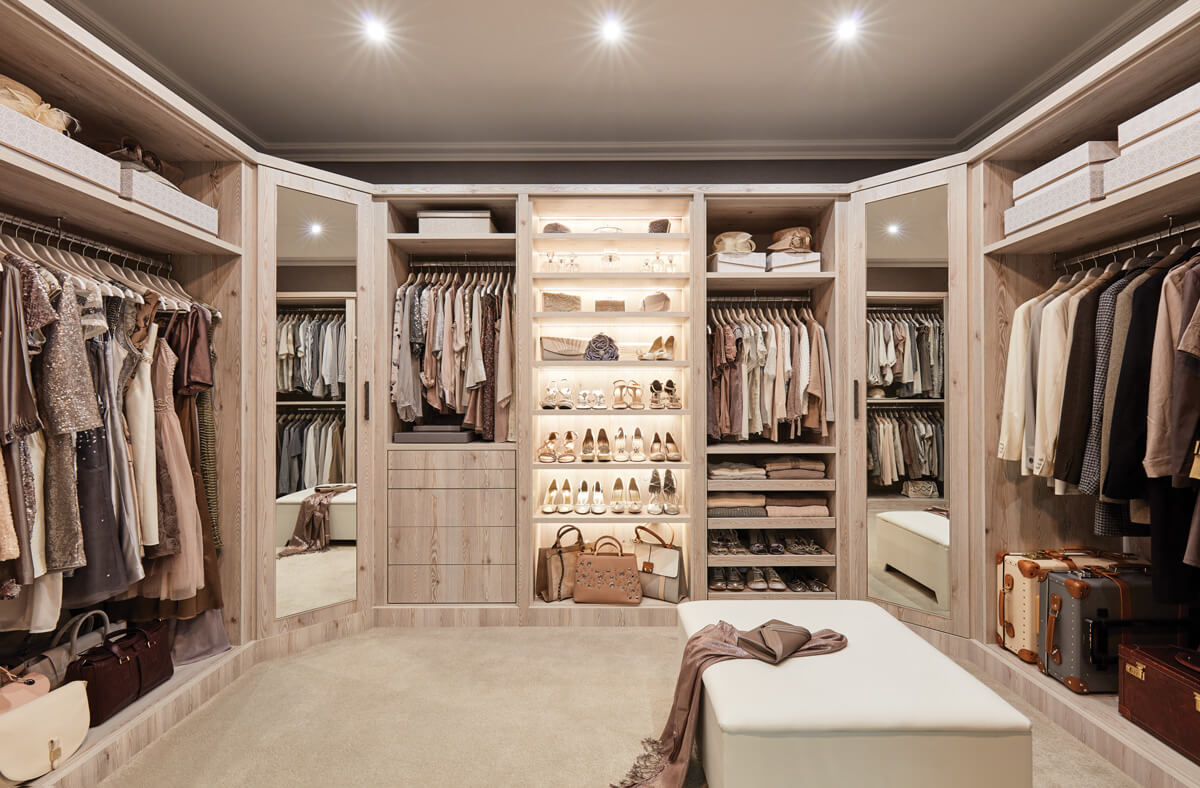
Now: Pale oak or ash with clean lines and matte finishes form a calm, enduring backdrop that supports layering, texture, and timeless styling.
Designing with memory, not mimicry
When the details are handled with care, they add depth and feeling without pulling the space into another era. In this way, design supports how you sleep, dress, and unwind every day, instead of becoming a set piece that belongs to another time.
At Neville Johnson, our designers listen for the memories and references that matter to you, then translate them into fitted furniture, materials and proportions that will serve you for years to come. If you would like to explore how nostalgic cues could work in your own bedroom or dressing space, request a personal design visit with an NJ designer.